
Kids Animation Production Timeline Planner for Creators


One of the most frequently underestimated aspects of kids animation production is time. Creators who are new to animation often assume that a short or a pilot episode can be produced in a few weeks, only to discover that professional animation -- even at modest production values -- follows a well-defined timeline that cannot be compressed without sacrificing quality. Understanding the real production timeline for kids animation is essential for planning grant applications, broadcaster pitches, and delivery commitments.
At Whizzy Studios, we have produced animation across a range of formats and styles, and we understand how production timelines work in practice. This guide gives you realistic timelines for every stage of kids animation production, from concept to delivery, so you can plan your project with confidence.
The Three Phases of Animation Production
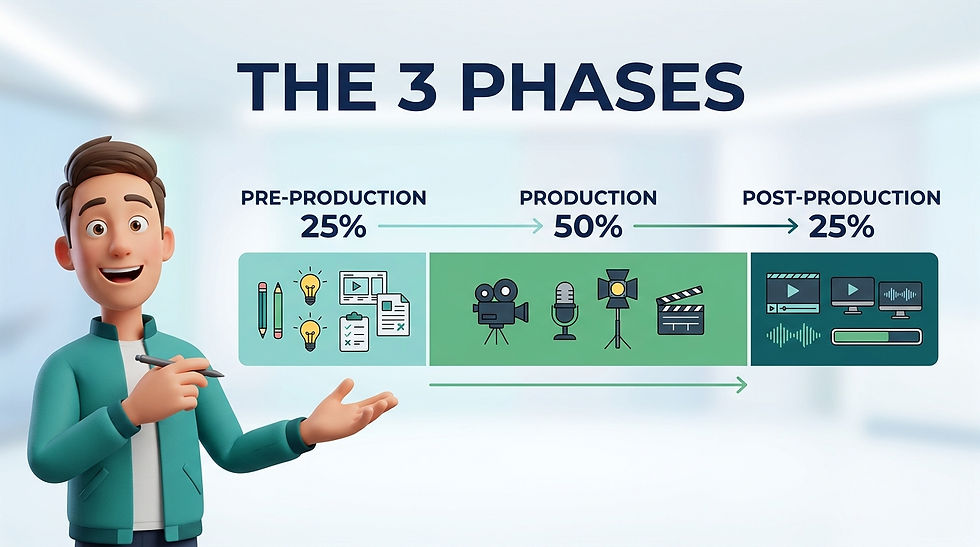
Every animation project, regardless of format or style, moves through three core phases: pre-production, production, and post-production. The time allocated to each phase is not arbitrary -- it reflects the sequential dependencies between the creative and technical tasks involved. Rushing pre-production always costs more time in production. Cutting post-production time always shows on screen.
The standard time allocation across professional kids animation production is approximately 25 percent of total project time in pre-production, 50 percent in production, and 25 percent in post-production. For a project with a 12-week total timeline, this means 3 weeks of pre-production, 6 weeks of production, and 3 weeks of post.
Pre-Production Timeline

Pre-production is where everything that animation will need to exist is created before the animation itself begins. For kids animation, this phase is particularly important because children's content requires clearly defined characters, consistent visual worlds, and age-appropriate storytelling that holds up across every scene in the project.
Script and story development -- a professional script for an 11-minute kids animation episode typically requires one to two weeks for the initial draft, plus one to two weeks for revisions and director approval. For a series of 13 episodes, writing all scripts before production begins typically takes 8 to 16 weeks with a single writer or 4 to 8 weeks with multiple writers working simultaneously.
Storyboarding -- professional storyboarding for a 22-minute episode takes approximately one to two weeks for an experienced animation storyboard artist. For an 11-minute episode, budget one week of storyboarding plus one week of director review and revision.
Storyboards for all 13 episodes of a series are typically boarded before production begins, adding 13 to 26 weeks of storyboard production.
Character and asset design -- a complete character design package for a kids animation series (all main characters, key supporting characters, expressions, and colour specifications) takes 4 to 8 weeks for a single character designer. Background and environment design for all the locations in the series adds a further 4 to 8 weeks. This work can run parallel to scripting and storyboarding to compress the overall timeline.
Voice recording -- in most professional animation pipelines, voice recording happens before animation, not after. This is because animators use the recorded voice performance to time their character movement. A voice recording session for a single 22-minute episode takes 2 to 4 hours in studio, with scheduling, preparation, and post-recording processing adding an additional week.
Production Timeline by Animation Style

The production phase is where the actual animation is created. Timeline here varies most significantly by animation style and team size.
2D cut-out animation (simple style, limited movement, software-assisted) -- an experienced animator can produce approximately 2 to 3 minutes of finished quality animation per week working solo. A 3-minute web episode therefore takes approximately 1 to 1.5 weeks of animation production. An 11-minute episode takes 4 to 6 weeks per animator. With a team of two to three animators working simultaneously on different scenes, an 11-minute episode can be animated in 2 to 4 weeks.
Full frame-by-frame 2D animation -- at broadcast quality, a professional 2D animation team produces approximately 15 to 30 seconds of finished animation per animator per day, or roughly 1 to 2 minutes per week. An 11-minute episode at this quality level requires 5 to 11 weeks of animation per animator. A studio with 8 animators working simultaneously on a single episode can deliver it in approximately 4 to 8 weeks per episode.
3D CGI animation -- 3D animation production timelines depend heavily on how many assets are already built. For a production with existing character rigs and environment models, a team of 4 to 6 animators can produce an 11-minute episode in 8 to 16 weeks. Building all assets from scratch for the first episode can take 3 to 6 months of pre-production before the first frame of animation is produced.
Post-Production Timeline
Post-production for kids animation includes compositing (combining animation layers into final scenes), colour grading, music scoring and recording, sound design, audio mixing, and final quality review.
For a single 11-minute episode, professional post-production takes approximately 2 to 4 weeks when handled by a dedicated post team. Music composition and recording (if original) is typically the longest post-production task, taking 2 to 4 weeks for a fully original score. Sound design, effects, and mixing for an 11-minute episode add approximately one week.
Final delivery for broadcast typically requires the episode in multiple formats for different platforms, plus subtitles, audio description tracks, and metadata, adding another 3 to 5 business days to the end of the timeline.
Realistic Total Timelines for Common Project Types

Putting all the phases together, here are realistic total production timelines for the most common kids animation project types.
3-minute educational web short (basic 2D) -- total timeline from script to delivery: 6 to 10 weeks. Pre-production 2 to 3 weeks, production 2 to 4 weeks, post-production 2 to 3 weeks.
11-minute pilot episode (broadcast 2D quality) -- total timeline: 16 to 28 weeks (4 to 7 months). Pre-production 4 to 8 weeks including character design and voice recording, production 8 to 16 weeks, post-production 4 to 6 weeks.
13-episode series (11 minutes per episode, 2D broadcast) -- total series timeline: 52 to 104 weeks (12 to 24 months). The first episode drives the longest timeline because all character and background assets must be built from scratch. Subsequent episodes benefit from existing asset libraries and parallel production pipelines.
How Timeline Affects Grant Applications and Funding Planning
Understanding your production timeline is directly linked to your funding strategy. Grant programs have application deadlines, processing times, and contract start dates. If your production timeline begins before a grant is confirmed, you may not be able to claim costs incurred before the grant start date.
Most major animation grant programs have processing times of 3 to 6 months from application submission to contract. This means that a project planning to begin production in January needs to submit its grant application by July of the prior year. Building this lead time into your timeline from the beginning prevents the cash flow crises that derail so many independent animation projects.
How Whizzy Studios Helps You Stay on Schedule
For creators who are preparing a grant application or a co-production pitch, one of the most valuable things a production partner can do is deliver quickly and reliably. Grant applications typically need a pilot or proof-of-concept animation as part of the submission package, and that material needs to be completed before the application deadline, not after.
At Whizzy Studios, we are experienced at delivering high-quality pilot animations within the timelines that grant application schedules require. We understand that our delivery date is connected to your funding opportunity, and we take that responsibility seriously. We provide realistic timelines upfront, communicate proactively throughout production, and deliver work that meets the quality standard your grant application needs.
Browse our portfolio to see the quality we deliver, and get in touch to discuss your project timeline and how we can work together to meet it.
A realistic production timeline is not a constraint on your creative vision. It is a sign that you understand your craft. Grant committees, broadcasters, and co-production partners all look at production schedules when they evaluate a project. A timeline that reflects real production knowledge tells them that this is a team that knows what they are building and how to build it. That is a form of credibility that no amount of creative polish can replace.


Comments