
The Psychology Behind Using Cute 3D Characters in Kids Content

Updated: Apr 29
If you’ve ever seen a child stop everything just to watch a smiling cartoon face on screen, you already understand the power of cute 3D characters. In kids content, connection doesn’t come from flashy effects or technical complexity. It comes from comfort, familiarity, and trust — the exact reason children’s animation works best when it feels warm and friendly.
Understanding the Impact of Cute Characters
QUICK LINKS:
The Science of Cuteness — Baby Schema & Emotional Triggers
Attention, Memory & Learning — How Cute Characters Improve Retention
Emotional Safety & Trust — Why Cute Characters Feel “Safe”
Parasocial Bonds — When Characters Become “Friends”
3D Design Psychology — What Makes a Character Feel Cute
When we say “cute,” we’re not just talking about visual style. The psychology of cute characters is about how children emotionally respond to what they see. Rounded shapes, big eyes, soft expressions — these are the building blocks of effective kids animation characters. That’s why thoughtfully crafted 3D animation for kids instantly feels safer and more welcoming than realistic or overly detailed designs.
This emotional response is also why kids engagement animation depends so heavily on simplicity. Friendly faces reduce visual effort and help children focus on what matters. In strong 3D cartoon characters, kids naturally know where to look — eyes, mouth, and gestures. This improves attention and retention in kids, especially during early learning phases where visual learning for children plays a huge role.
Behind this connection is intentional character design for kids, not guesswork. Great child-friendly character design makes children feel relaxed instead of overwhelmed. At Whizzy Studios, this psychology-driven approach is a core part of creating meaningful kids animation studio projects — whether it’s 3D Animation for digital platforms or long-form storytelling for Kids TV Shows.
Another reason why kids like cute cartoon characters is emotional comfort. A gentle character lowers fear, builds trust, and creates a sense of safety. This is why kids learning through animation works best when visuals feel kind and predictable. Over time, this leads to strong emotional bonding with characters, where kids see them as familiar friends rather than just on-screen visuals.
This is exactly why professional 3D Character Design and well-planned Storyboard development matter so much in children-focused projects. Whether it’s a 3D cartoon series production, a learning-driven Children’s TV Series, or short-form kids content, the goal stays the same — create safe and friendly characters that children want to come back to again and again.
In simple terms, why 3D characters work in kids content has very little to do with technology. It’s about emotion, trust, and connection. When done right, animation for children’s content becomes more than entertainment — it becomes a space where kids feel comfortable learning, exploring, and growing.
The Science of Cuteness — Baby Schema & Emotional Triggers

Have you ever noticed how kids instantly smile back at certain characters? That reaction isn’t random. It’s driven by something called baby schema, a natural response built into the human brain. In simple terms, baby schema (Kindchenschema) refers to a set of features that automatically trigger feelings of care, warmth, and attention — especially in young children. This is one of the biggest reasons cute 3D characters work so effortlessly in kids content and children’s animation.
So what actually makes a character feel cute? Think big eyes, round faces, small noses, soft cheeks, and a larger head compared to the body. These traits are deeply tied to how children emotionally process visuals. In kids animation characters, these physical cues instantly communicate safety. That’s why 3D animation for kids leans heavily toward softer proportions instead of sharp, realistic designs. Kids don’t need realism — they need reassurance.
This is where the psychology of cute characters becomes incredibly powerful. When children see these features, their brains release positive emotional responses before logic even kicks in. This lowers emotional resistance and increases curiosity. That’s exactly why kids engagement animation works better when characters look friendly and approachable. The design itself invites the child to stay, watch, and interact.
These emotional triggers are especially strong in early childhood. Younger kids are still learning how to process the world, so safe and friendly characters act as emotional anchors. In well-designed 3D cartoon characters, children feel comforted, not challenged. This directly supports visual learning for children, helping them focus longer and remember more. In fact, attention and retention in kids improve significantly when visuals feel emotionally secure.
From a creation perspective, this isn’t accidental. Strong character design for kids and intentional child-friendly character design are the foundation of effective storytelling. Studios like Whizzy Studios apply these principles across their 3D Character Design and 3D Animation projects, especially when developing long-form kids TV shows animation and educational kids content.
This science is also why kids learning through animation feels more natural when characters look gentle and expressive. Over time, children begin forming emotional bonding with characters, treating them as familiar companions rather than just visuals on a screen. This emotional bond is what makes children’s TV series animation, 3D cartoon series production, and recurring Kids TV Shows so effective.
In short, why kids like cute cartoon characters comes down to instinct. Why 3D characters work in kids content isn’t about trends or styles — it’s about human psychology. When creators respect these emotional triggers and apply them correctly through thoughtful 3D animation services, cute characters stop being “just cute” and start becoming trusted guides in a child’s learning and emotional world.
Attention, Memory & Learning — How Cute Characters Improve Retention

Think about how kids actually watch content. They don’t sit still and “analyze” information. They scan, feel, react, and decide within seconds whether something is worth their attention. This is exactly where cute 3D characters make a huge difference in kids content and children’s animation. Simple, friendly designs don’t overwhelm young minds — they guide them.
One of the biggest challenges in animation for children’s content is cognitive overload. Too many details, sharp textures, or complex movements force kids to work harder just to understand what they’re seeing. In contrast, well-crafted kids animation characters use softness and simplicity to reduce mental effort. This is why 3D animation for kids with clean shapes and clear expressions keeps children watching longer. Less effort means more focus, and more focus means better learning.
Another powerful reason why kids like cute cartoon characters is memory. Children remember faces far better than abstract information. When a child connects with a character, that character becomes a visual anchor. Strong 3D cartoon characters turn lessons into experiences. Instead of remembering “what was said,” kids remember who said it. This is how kids learning through animation becomes natural and enjoyable rather than forced.
This character-based memory is directly tied to visual learning for children. Clear eyes, readable emotions, and expressive gestures help kids quickly decode meaning. In well-designed kids engagement animation, children don’t struggle to interpret emotions or actions — they instantly understand them. That clarity dramatically improves attention and retention in kids, especially in early education and storytelling formats.
Behind every effective learning-focused animation is intentional character design for kids. Thoughtful child-friendly character design ensures that expressions, poses, and movements are easy to read even at a glance. At Whizzy Studios, this clarity-first approach is central to creating impactful 3D Character Design and educational 3D Animation projects for kids TV shows animation and digital-first kids content.
This is also where planning plays a crucial role. A strong Storyboard helps map visual focus before animation even begins, ensuring every scene supports learning rather than distracting from it. Whether it’s a Children’s TV Series, a 3D cartoon series production, or short-form Kids TV Shows, visual clarity is what turns animation into a learning tool.
In the end, why 3D characters work in kids content comes down to how young brains learn best. Friendly faces lower effort, increase emotional comfort, and create stronger memory hooks. When paired with professional 3D animation services, cute characters don’t just entertain — they help children focus, remember, and learn with ease.
Emotional Safety & Trust — Why Cute Characters Feel “Safe”

For kids, feeling safe comes before learning. If something feels scary, confusing, or too intense, they simply tune out. This is why cute 3D characters play such a powerful role in kids content and children’s animation. Friendly characters act like emotional guides, helping children relax and stay open to what’s happening on screen.
One of the main reasons why kids like cute cartoon characters is that they reduce fear almost instantly. Soft facial features, warm expressions, and gentle movements signal that nothing bad is about to happen. In thoughtfully designed kids animation characters, there are no sharp angles, harsh reactions, or unpredictable behavior. This predictability is what makes 3D animation for kids feel comforting instead of overwhelming.
This emotional safety directly impacts kids engagement animation. When visuals feel calm and non-threatening, kids engage longer and with less resistance. They don’t feel the need to pull away or look elsewhere. This sense of trust supports attention and retention in kids, especially when content is meant to teach or guide behavior. Strong visual learning for children depends heavily on this emotional comfort.
This is also why kids learning through animation works so well for everyday routines and sensitive topics. Cute characters are often used to explain brushing teeth, sharing toys, bedtime habits, or even first-day-of-school anxiety. In these moments, safe and friendly characters feel more like helpers than instructors. Over time, this builds emotional bonding with characters, making kids more willing to listen and imitate positive behavior.
Behind this trust is intentional character design for kids. Effective child-friendly character design focuses on emotional readability — clear expressions, slow and predictable motion, and body language that feels reassuring. At Whizzy Studios, these principles are applied across 3D Character Design and 3D Animation projects created specifically for kids TV shows animation and educational kids content.
Careful planning also matters. A well-structured Storyboard ensures that scenes flow smoothly and emotions never spike too suddenly. Whether it’s a full Children’s TV Series, a recurring 3D cartoon series production, or short-form Kids TV Shows, emotional pacing is just as important as visual quality.
At its core, why 3D characters work in kids content is about trust. When children feel emotionally safe, they stay curious, engaged, and ready to learn. With the right 3D animation services, cute characters stop being just entertainment and become reliable companions in a child’s everyday world.
Parasocial Bonds — When Characters Become “Friends”
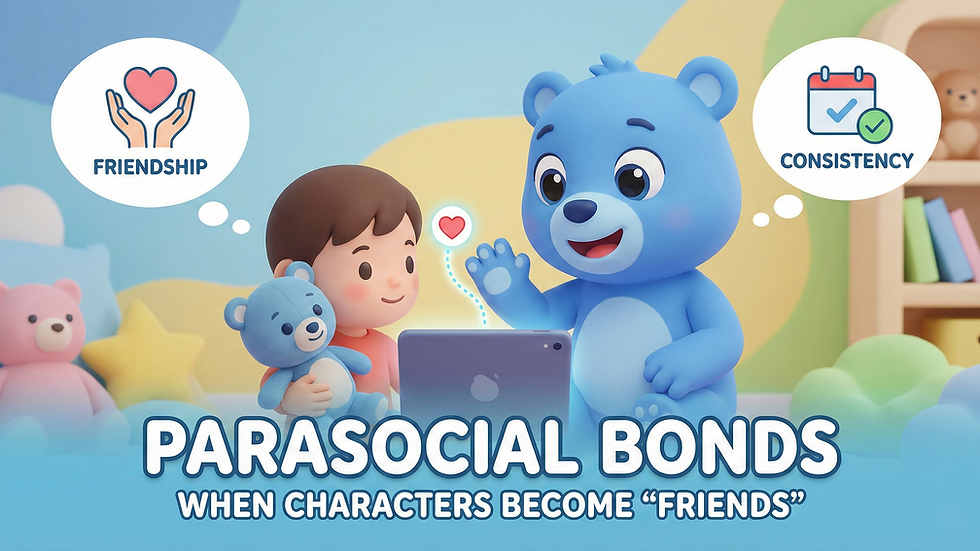
If you’ve ever seen a child talk back to a cartoon or copy a character’s actions, you’ve witnessed a parasocial bond forming. In simple terms, kids don’t see animated characters as “content.” They see them as companions. This is one of the strongest reasons cute 3D characters are so effective in kids content and children’s animation.
Children form emotional connections much faster than adults, especially with familiar faces. When kids repeatedly see the same kids animation characters, those characters start to feel real. This is why 3D animation for kids works best when characters appear consistently and behave predictably. Over time, this leads to deep emotional bonding with characters, where children feel comfort, trust, and familiarity.
Consistency is the secret ingredient here. A character with a stable personality, tone, and behavior becomes reliable. This reliability is crucial for kids learning through animation. Children are far more likely to imitate behavior from characters they trust. In strong kids engagement animation, kids don’t just watch — they copy, repeat, and learn. This is how positive habits and social skills are absorbed naturally.
This is also where memory comes into play. Kids remember characters long after they forget individual lessons. Strong 3D cartoon characters act as emotional anchors, improving attention and retention in kids. When visuals remain familiar and friendly, visual learning for children becomes easier and more effective. This is a major reason why kids like cute cartoon characters so much — they feel like friends, not teachers.
Creating these bonds requires thoughtful character design for kids. Effective child-friendly character design ensures expressions, gestures, and reactions stay consistent across episodes and platforms. At Whizzy Studios, this long-term thinking is applied across 3D Character Design and 3D Animation projects built for kids TV shows animation and episodic kids content.
Recurring characters are especially powerful in formats like Children’s TV Series, 3D cartoon series production, and ongoing Kids TV Shows. With a clear Storyboard and well-defined personalities, each episode strengthens loyalty and comfort rather than resetting the emotional connection.
At the heart of it, why 3D characters work in kids content is emotional continuity. When characters feel familiar, kids feel safe. And when kids feel safe, learning, imitation, and long-term engagement happen naturally through thoughtful 3D animation services.
3D Design Psychology — What Makes a Character Feel Cute
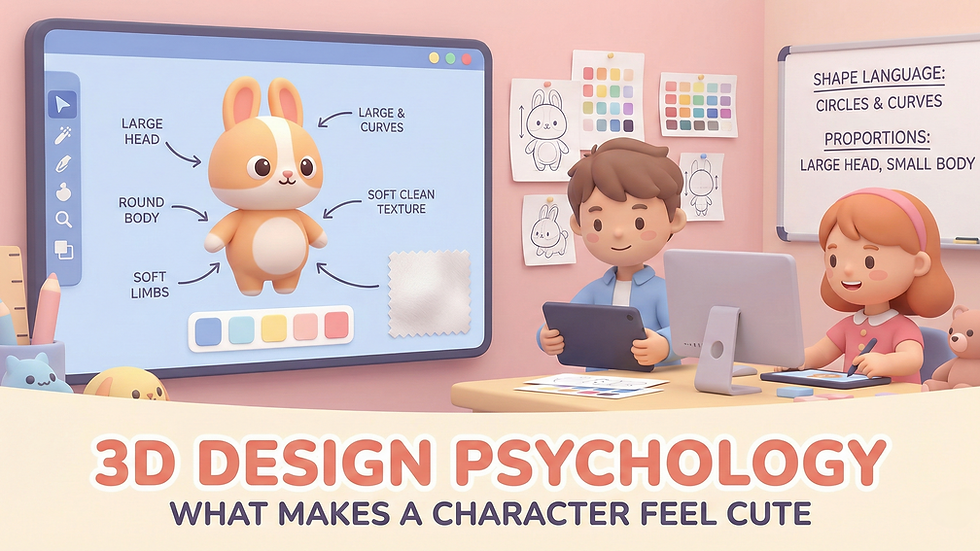
Cuteness isn’t accidental. In kids content and children’s animation, what feels “cute” is carefully designed using psychology, not guesswork. Every curve, proportion, and movement in cute 3D characters is meant to signal safety, friendliness, and approachability the moment a child looks at the screen.
It starts with shape language. Rounded shapes instantly feel safe to children. Circles and soft curves dominate effective kids animation characters, while sharp angles are kept minimal. This is why 3D animation for kids avoids aggressive silhouettes. A round head, soft body forms, and simplified limbs help kids emotionally relax, making kids engagement animation feel inviting rather than intense.
Proportions matter just as much. In strong character design for kids, heads are slightly oversized, eyes are wider apart, and bodies are smaller and softer. These proportions mirror how children perceive themselves and others. This is one of the key reasons why kids like cute cartoon characters so instinctively. These visual choices improve visual learning for children by making emotions easier to read and understand.
Facial features play a massive role in trust and memory. Large eyes, expressive eyebrows, and simple mouth shapes allow emotions to be read instantly. In well-crafted 3D cartoon characters, kids don’t need explanation — they feel what the character is feeling. This emotional clarity strengthens attention and retention in kids and supports kids learning through animation.
Motion is just as important as appearance. Fast, jerky movements can overwhelm young viewers. Instead, animation for children’s content uses softer timing, bouncy motion, and clear poses. These movement choices help safe and friendly characters feel alive without being chaotic. Predictable motion patterns also strengthen emotional bonding with characters, reinforcing comfort and familiarity.
Color and texture complete the experience. Bright but gentle colors work best for kids content, while textures stay clean and uncluttered. Overly realistic materials can break trust, which is why child-friendly character design avoids heavy detail. This careful balance is applied consistently at Whizzy Studios across 3D Character Design and 3D Animation projects built specifically for kids TV shows animation.
To achieve this consistency, planning is essential. A strong Storyboard ensures characters move, react, and emote in ways that stay readable and comforting from scene to scene. Whether it’s a full Children’s TV Series, a 3D cartoon series production, or ongoing Kids TV Shows, these design principles help create characters kids recognize, trust, and love.
At its core, why 3D characters work in kids content comes down to thoughtful design. When 3D animation services combine psychology, simplicity, and consistency, cute characters become more than visuals — they become emotional companions that kids want to return to every day.
Doing It Right — Benefits, Risks & Best Practices for Creators
When used thoughtfully, cute 3D characters can completely transform kids content and children’s animation. They aren’t just there to look good — they shape how kids feel, focus, and learn. But like anything powerful, they need to be handled responsibly.
The biggest benefit of using cute 3D characters is connection. Friendly visuals instantly lower resistance and build trust. This makes kids engagement animation stronger from the very first second. Kids stay longer, react more positively, and absorb messages more easily. This is why kids learning through animation works so well when characters feel kind and familiar. Over time, this leads to stronger attention and retention in kids, especially in educational or habit-based content.
Another major advantage is emotional comfort. Well-designed kids animation characters feel safe and predictable, which supports visual learning for children. Kids don’t feel rushed or overwhelmed. Instead, they feel guided. This emotional stability encourages emotional bonding with characters, turning one-time viewers into loyal followers — a huge reason why kids like cute cartoon characters and keep coming back to the same shows.
However, there are real risks if design goes too far. Overstimulation is one of the most common mistakes in animation for children’s content. Too many colors, exaggerated motion, or hyperactive expressions can confuse or exhaust young viewers. Over-design can also break trust. If a character feels chaotic or inconsistent, kids disengage quickly — even if the visuals are technically impressive.
Responsible character design for kids means knowing where to stop. Strong child-friendly character design focuses on clarity over complexity. Movements should feel intentional, expressions easy to read, and pacing calm enough for young minds to process. This balance is what separates effective 3D animation for kids from content that simply looks busy.
From a production standpoint, this is where experience matters. At Whizzy Studios, these best practices guide every project — from early Storyboard planning to final 3D Character Design and polished 3D Animation. Whether it’s kids TV shows animation, a full Children’s TV Series, or a recurring 3D cartoon series production, design decisions are always aligned with how children actually think and feel.
Practical guidelines for creators are simple but powerful: design for the child’s age group, keep personalities consistent, avoid visual overload, and prioritize emotional readability over realism. When done right, safe and friendly characters become trusted guides rather than distractions.
The final takeaway is this: why 3D characters work in kids content isn’t about trends or technology. Cute characters are emotional tools. When supported by thoughtful 3D animation services, they help children feel safe, stay focused, and learn naturally. Used responsibly, they don’t just entertain — they support emotional growth, learning, and long-term connection.


Comments