
Why Some Kids Content Calms Children While Others Leave Them Wired


You've probably felt it. Two episodes of one show and your child comes off the screen calm, happy, ready to play or sit for dinner. Two episodes of something else and they're bouncing off the walls, irritable, impossible to redirect. The screen time was the same. The child was the same. But the content was completely different.
This isn't in your head, and it isn't random.
There is a real and meaningful difference between kids' content that regulates a child's nervous system and content that activates it. Parents feel this difference every single day. Researchers are increasingly documenting it. And the studios and creators who understand it are the ones making content that parents actually trust - and keep coming back to.
What's Actually Happening in Your Child's Brain

Young children have nervous systems that are still developing. They don't yet have the same capacity as adults to self-regulate - to bring themselves back to calm after stimulation, to process rapid sensory input without being overwhelmed by it. Their brains are wired to respond to their environment, and the screen in front of them is very much part of that environment.
Content that features rapid cuts, loud sudden sounds, erratic movement, and high-stakes conflict with no resolution puts a young nervous system into a state of activation. The brain reads these signals as something requiring attention and alertness. For a child who is already tired, hungry, or emotionally stretched, that activation can tip quickly into dysregulation - the wired, overwhelmed, hard-to-reach state that parents dread at the end of a screen time session.
Content that features consistent pacing, predictable structure, warm character relationships, and conflict that resolves gently does the opposite. It gives the nervous system something to settle into. The child's brain can follow without being overwhelmed. The emotional tone tells them: this is safe, this is familiar, you can relax. And they do.
The Design Choices That Make the Difference

The gap between calming content and activating content is not accidental. It is built into the design of the show - sometimes deliberately, sometimes carelessly. Understanding what those choices are helps parents identify what they're looking for, and helps creators understand what they're responsible for.
Pacing and editing rhythm

The single biggest variable in whether content calms or activates is how fast it moves. Rapid-fire editing - cuts happening every one or two seconds, scenes that barely settle before they shift - keeps the brain in a state of constant catching-up. Slower, more deliberate pacing allows a child's nervous system to orient, process, and relax into what they're watching. The best calming content for young children is almost always content that isn't in a rush.
Sound design and music

Sudden loud sounds trigger the startle response. High-pitched, frenetic music elevates heart rate. Neither of these is inherently wrong in adult content - but in shows designed for young children, they carry real consequences. Warm, consistent music and sound design that avoids jarring spikes creates an audio environment that supports calm rather than fighting against it. Parents often notice the difference here even before their children do.
How conflict is handled
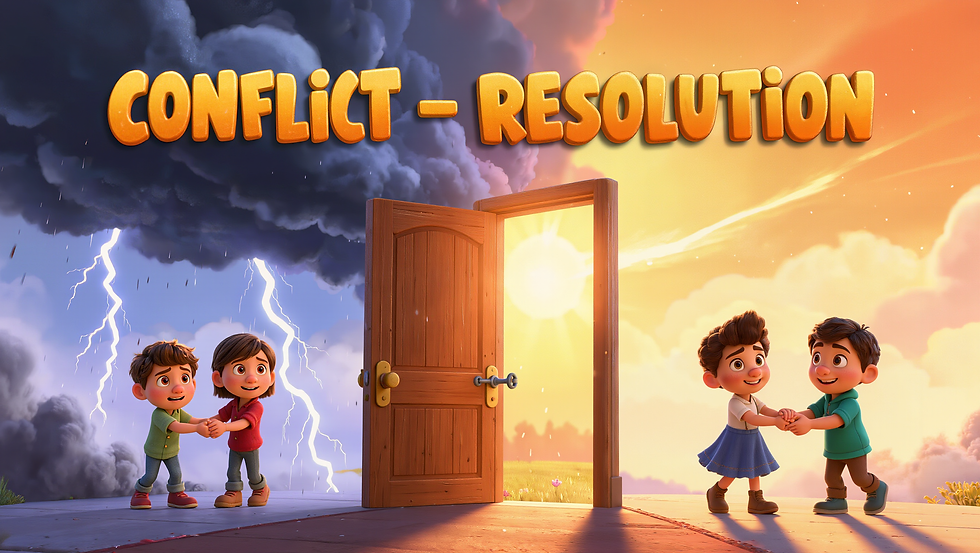
Every good story has conflict - and children's content is no exception. The question is what happens to that conflict. Content that escalates tension repeatedly without resolution, or that uses conflict primarily for excitement rather than meaning, keeps a child in a sustained state of stress. Conflict that leads somewhere - that is faced, worked through, and resolved within an emotional framework the child can follow - teaches something real and leaves the nervous system in a better place than it found it.
Character energy and emotional tone
Characters who are constantly shouting, panicking, or operating at maximum intensity communicate urgency to a young viewer's brain - even in a comic context. Characters who are curious, warm, occasionally frustrated but fundamentally grounded model a regulated emotional state that children's nervous systems actually mirror. This is one of the most underrated aspects of kids' character design, and one of the things we think about most carefully at Whizzy Studios.
Why This Matters for Creators and Brands

If you are making content for children - whether that's a kids' TV series, a 3D animated YouTube channel, or an educational series for an EdTech platform - these design choices are not optional extras. They are the difference between content that parents actively seek out and content that gets quietly removed from the approved playlist.
Parents talk to each other. They share recommendations with the same specificity and conviction they bring to any parenting decision. 'This one is fine but it winds them up.' 'That one they can watch before bed and still go to sleep.' These are real assessments that shape what gets watched and what gets turned off - and they are almost entirely driven by how the content makes children feel, not what it looks like.
The brands that win long-term in kids' media are the ones that parents trust - not just with their children's time, but with their children's nervous systems. That trust is built one design decision at a time, across every episode, every scene, every sound cue.
The Standard We Hold Our Work To

At Whizzy Studios, the question 'would we let our own kids watch this?' isn't just about values or content appropriateness. It's also about this - about how the content makes a child feel when it ends. We ask whether the pacing is right for the age. Whether the music supports calm or undermines it. Whether the character energy is something a child's nervous system can settle into rather than be activated by.
The characters we design are built to be warm, grounded, and emotionally consistent - not because that's easier, but because that's what children need from the characters they spend time with. A child who finishes an episode feeling calm, happy, and slightly more capable than before is a child whose parent will press play again tomorrow. That's the outcome we design toward.
What to Look for as a Parent
You don't need a research paper to evaluate the content your child is watching. You just need to watch what happens when it ends. Do they come off the screen in a state you recognize and can work with? Are they willing to transition? Are they in roughly the same emotional place they were in before, or noticeably more activated?
Trust that read. Your instinct as a parent is picking up on exactly the design signals we've described here. The content that passes your test - the shows that your child loves and that you feel good letting them watch - is the content worth investing more time in. It was probably made by people who thought carefully about exactly this.
If you're making content for kids and you want to build something parents will genuinely trust, we'd love to talk about how we approach this from the very first frame.


Comments