
Why Your Kids Brand Needs a Character, Not Just a Logo, in 2026


Every brand that sells to children has a logo. It is on the packaging, the website, the app icon, the promotional materials. The logo tells people what the brand is called. It communicates a visual style. It functions as a recognition marker across touchpoints. What it cannot do - what no logo has ever been able to do - is make a child feel something. And in 2026, for brands competing for the attention and loyalty of young children, making children feel something is the entire game.
The brands that are winning in children's markets right now are not the ones with the best logos. They are the ones with the best characters. Healthcare companies, EdTech platforms, food brands, toy manufacturers, children's clothing labels - across every category that sells to or through children - the brands building genuine emotional loyalty are the ones that created a character children actually care about. The ones that did not are spending more and more to hold the attention of an audience that is increasingly immune to logo-first marketing.
The Difference Between a Logo and a Character
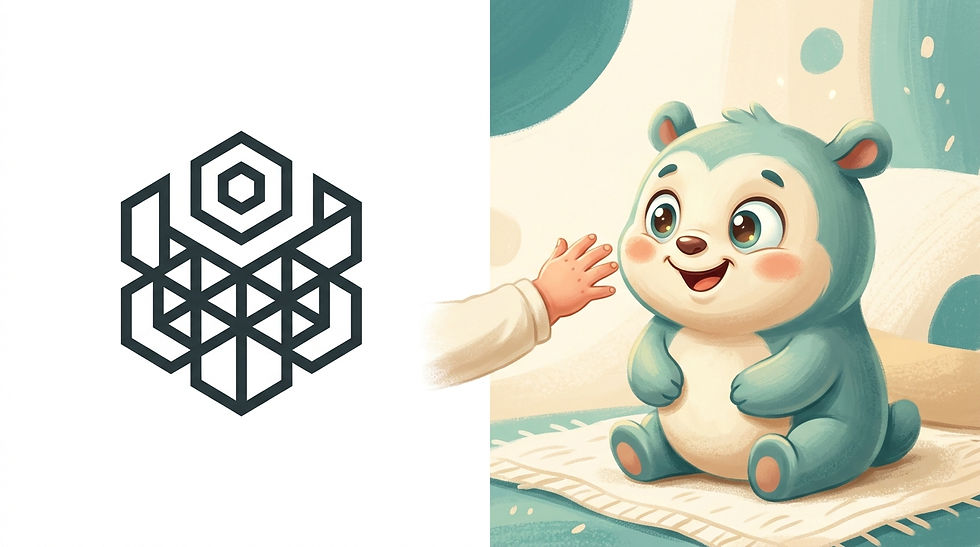
A logo is a symbol. It is passive, consistent, and abstract. It does not have an opinion. It does not have a personality. It does not have a relationship with the child looking at it. It simply identifies. A brand character, by contrast, is an agent. It acts, it responds, it has qualities that children can describe without being prompted. Ask a child what their favourite logo is and they will probably not be able to answer. Ask a child what their favourite character is and they will tell you not just the name but the personality, the things the character does, the reasons they like them.
That gap - between passive identification and active relationship - is what separates brands that children feel loyal to from brands that children simply recognise. Recognition is the floor, not the ceiling. In a market where children have access to hundreds of brands competing for their attention and their parents' purchasing decisions, recognition without emotional attachment is not enough to sustain loyalty, drive advocacy, or justify premium pricing.
The research on this is unambiguous. Children who have formed an attachment to a brand character are significantly more likely to ask their parents to buy that brand's products. They are more likely to seek out new products from the brand when they appear. And critically, they are more likely to maintain loyalty to the brand as they grow - because the character is part of their emotional memory, not just their purchasing habit.
Which Industries Are Already Getting This Right

The toy industry understood the power of brand characters first. Brands like LEGO, Hasbro, and Mattel have spent decades building characters that drive not just product sales but entire content ecosystems. The character drives the TV show, the TV show drives toy sales, the toy sales fund more content. The character is the engine of the entire business, and that model is now being replicated across industries that have historically relied on product quality and logo recognition alone.
Healthcare brands working in the children's space have discovered that animated characters reduce children's anxiety about health interactions in measurable ways. A familiar, warm character who models going to the doctor or brushing teeth can shift a child's emotional relationship with that activity in ways that no amount of parent communication can achieve alone.
Food and drink brands targeting families have similarly found that characters drive trial and repeat purchase more effectively than any other marketing tool. Children who have a favourite character ask for the product by the character's name. They notice when the character appears in a new context. They feel a connection to the brand that a flavour or a price point could never create. The character is the brand asset, not the product.
What Happens When You Get the Character Right
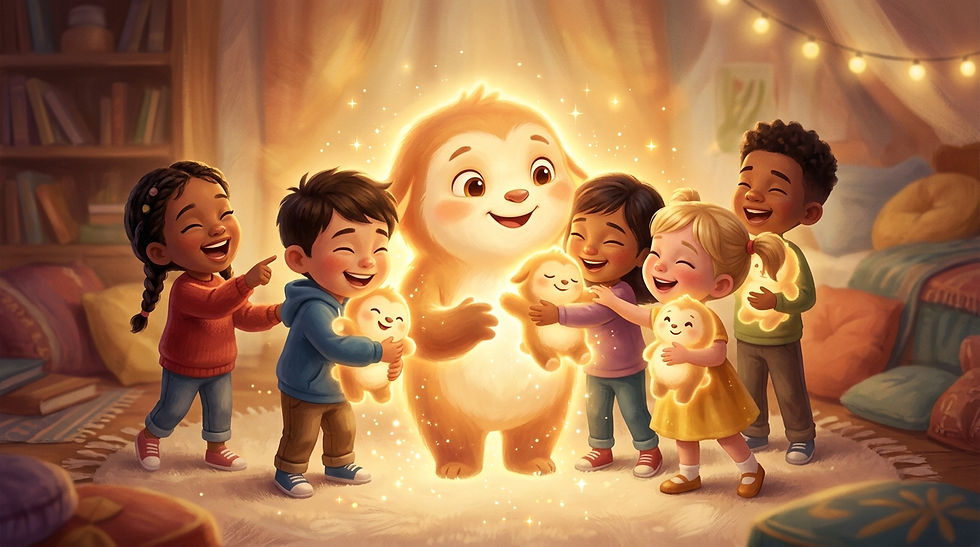
When a brand character succeeds, the effect compounds over time in ways that traditional brand assets cannot match. A character that earns a child's love does not just influence one purchasing decision. It becomes part of how that child understands the brand, part of the emotional vocabulary they associate with the product category, and part of the stories they tell their friends. Characters like Tony the Tiger have been driving brand recognition and emotional loyalty for decades not because they are beautifully designed logos but because they have personalities that people can relate to.
For smaller brands, the opportunity is significant precisely because the space is less crowded. In most children's product categories outside toys and entertainment, original brand characters are still rare enough that a well-designed character can establish category ownership that would be impossible to achieve through product differentiation or advertising spend alone. The brand that owns the beloved character in a category owns the emotional territory of that category.
The Mistake Brands Make When They Try to Rush It
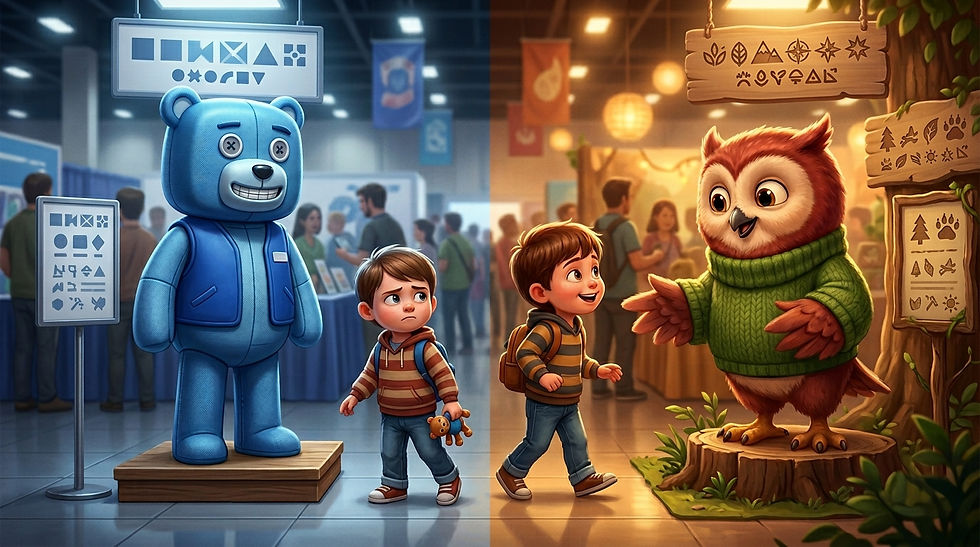
The most common failure mode for brand character projects is treating the character as a design output rather than a strategic asset. A character that is designed without dedicated thinking about personality, emotional register, target age group, and cross-platform behaviour will typically fail to land with children in the way that drives real brand loyalty.
Children are extraordinarily sensitive detectors of inauthenticity in character design. A character that was clearly designed to sell something, rather than designed to be genuinely liked, communicates that intention to children almost immediately. The character feels hollow. The eyes feel cold. The expressions feel performed rather than real. And children, who are in the business of forming deep attachments to characters they trust, simply do not attach to characters that do not feel trustworthy.
How Whizzy Studios Builds Characters That Become Brand Assets
At Whizzy Studios, we build characters for brands that want more than a mascot. We build characters that become the emotional heart of everything the brand does for children - across 2D animation, 3D animation, product packaging, digital experiences, and any other touchpoint where children encounter the brand.
Our work in 3D character design, concept art, and 2D book illustration is built around the principle that a character designed for children must earn their trust before it earns anything else. We start every brand character project with deep questions about the emotional experience you want children to have, and we design every visual and personality detail to serve that experience.
Whether you are a healthcare brand, a food company, an EdTech platform, or a children's product business of any kind, if you are selling to children and you do not yet have a character they care about, that is a gap worth closing in 2026. Talk to us about what your brand character could be, and let us show you what it looks like when a character is built to be genuinely loved.


Comments