
How Gen Alpha Watches Animation Differently (And What Creators Need to Know)

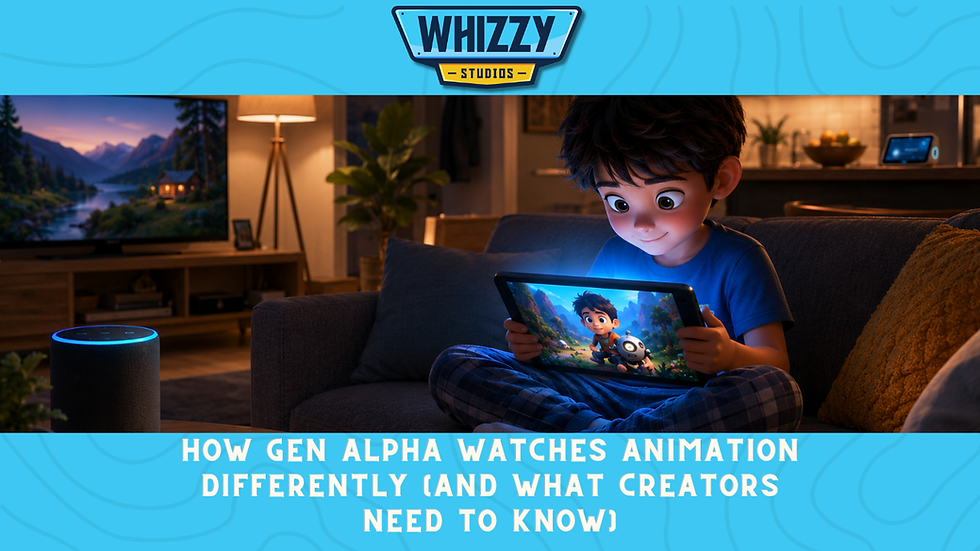
If you are building kids animation for an audience born from 2013 onwards, you are making content for Generation Alpha. And if you are using the same assumptions that worked for content aimed at Millennials or even early Gen Z children, you are probably missing more than you realise. Gen Alpha does not just watch animation differently from previous generations. They engage with it differently, attach to it differently, and reject it differently.
Understanding those differences is not optional for anyone serious about building a kids channel or brand in 2026.
Gen Alpha is the first generation that has never known a world without smartphones, voice assistants, and algorithm-curated content. They are also not a monolith. A six-year-old Gen Alpha child and a twelve-year-old Gen Alpha child have meaningfully different content expectations. But across the range, there are patterns in how this generation connects with animated characters that every creator and brand should understand.
Who Gen Alpha Actually Is

Gen Alpha, broadly defined as children born from 2013 through to 2026, represents one of the largest generational cohorts in history. There are nearly two billion young Alphas worldwide, growing up as the most digitally immersed generation ever studied. They encountered screens before they could walk. Many learned to navigate a touchscreen before they could read. And they have grown up with infinite content competing for their attention at every moment.
They have no patience for content that does not reward them quickly, but they have extraordinary loyalty to content they love. They are more likely than any previous generation to rewatch the same episode dozens of times once they have formed an attachment to a character. The combination of zero patience for the unfamiliar and fierce loyalty to the beloved is what makes Gen Alpha such a distinctive and challenging audience to serve.
Parents often describe discovering that their child has watched the same ten episodes of a show hundreds of times while ignoring the rest of the library entirely. That is not a bug in Gen Alpha's viewing behaviour. It is a feature. It reflects a deep need for emotional safety and familiarity that expresses itself through repetition, and it is one of the most important insights any kids content creator can have.
How They Watch (And Why It Matters for Your Content)

Gen Alpha does not consume animation the way earlier generations consumed Saturday morning cartoons. They watch on demand, in short bursts and long sessions, on phones and tablets as much as on screens - and often with parents nearby who have strong opinions about what earns a place in the rotation. The dual audience of child engagement and parent approval is something every Gen Alpha content creator must balance.
Discovery for Gen Alpha still happens primarily through YouTube and YouTube Kids, but increasingly through recommendations from other children. Word of mouth among children is a powerful distribution channel, and the content that travels through it is almost always built around a character children want to represent. A character they want to tell their friends about.
Short-form content on YouTube Shorts has changed how Gen Alpha discovers new channels, but it has not changed what makes them stay. Discovery is short-form. Loyalty is built in long-form. The creators growing fastest in the Gen Alpha space in 2026 are using short clips to find new audiences and investing in full-length character-driven episodes to keep them.
What Characters Gen Alpha Actually Connects With

The characters that Gen Alpha connects with most deeply share qualities worth studying. First, they are emotionally honest. Gen Alpha children are growing up in an era of heightened emotional literacy. Characters who express genuine frustration, genuine sadness, genuine joy, and genuine uncertainty resonate far more than characters who are consistently cheerful and untroubled.
Second, Gen Alpha characters tend to be curious and capable. This generation has watched adults use technology to solve any problem instantly, and they apply the same high-agency expectation to the characters they love. Characters who identify problems, form plans, and work through challenges - even imperfectly - hold Gen Alpha's attention in a way passive characters do not.
Third, Gen Alpha responds powerfully to visual distinctiveness. This is a generation raised on algorithmic thumbnail culture. They can assess visual content in under a second and decide whether it belongs in their world or not. A character whose design does not immediately communicate something warm, fun, or intriguing will be skipped without a second thought. Strong visual identity is not a nice-to-have for Gen Alpha content. It is the price of entry.
The Mistakes That Lose Gen Alpha Fast

The most common mistake creators make is treating Gen Alpha as a younger version of an older audience. Gen Alpha children are not small Millennials. They have different cultural references, different digital fluency, and different emotional expectations. Content that feels designed for a generic "children" audience rather than the specific reality of how Gen Alpha lives is something this generation rejects quickly and without explanation.
The second most common mistake is inconsistency. Gen Alpha children who love a character are deeply sensitive to changes in how that character looks, sounds, or behaves across different episodes, platforms, or formats. A character whose design changes noticeably between seasons or who behaves differently in a YouTube Short than in a long-form episode creates cognitive dissonance that can break the attachment entirely. Consistency is not just quality control. For this audience, it is trust.
How Whizzy Studios Designs for the Gen Alpha Generation
At Whizzy Studios, everything we know about Gen Alpha feeds directly into how we approach 3D character design and 2D animation for clients building in this space. Visual distinctiveness. Emotional honesty. Consistency across every format. These are not abstract principles for us. They are the practical design criteria that determine whether a character lands with a six-year-old in 2026.
Whether we are building a character for a children's TV series, a 3D cartoon series, or a YouTube-first kids brand, we build with Gen Alpha's viewing reality in mind from the very first design decision. Our characters are built to hold attention, earn loyalty, and travel - across formats, across platforms, and across the years of a child's growing up.
If you are building something for this generation and you want a character at the centre of it that actually connects, we would love to be part of the process. Reach out to Whizzy Studios and let us talk about what your Gen Alpha audience needs from the character you are creating.


Comments