
Kids YouTube Channel Characters - Why Custom Beats Generic Every Time


You've seen the channels. A colorful animal mascot that looks like it came from a stock library. A robot character that appears on seventeen other channels with different names. A thumbnail face so generic you couldn't describe it ten seconds after looking away. The channel might have decent content. But the character - the thing children are supposed to connect with - feels borrowed. Because it was.
And children know.
Not consciously. They can't articulate it. But kids have an extraordinary sensitivity to authenticity. They know when something was made for them specifically, and they know when something was assembled from whatever was available. The channels they love, the characters they carry in their imaginations long after the screen goes off - those are almost always built from scratch, around an idea that belonged to someone.
What Generic Actually Costs You
Starting with a generic or template character feels like the practical choice. It's faster. It's cheaper upfront. It gets something on screen while you're still figuring out your content strategy. But the cost shows up later, and it shows up in ways that are hard to recover from.
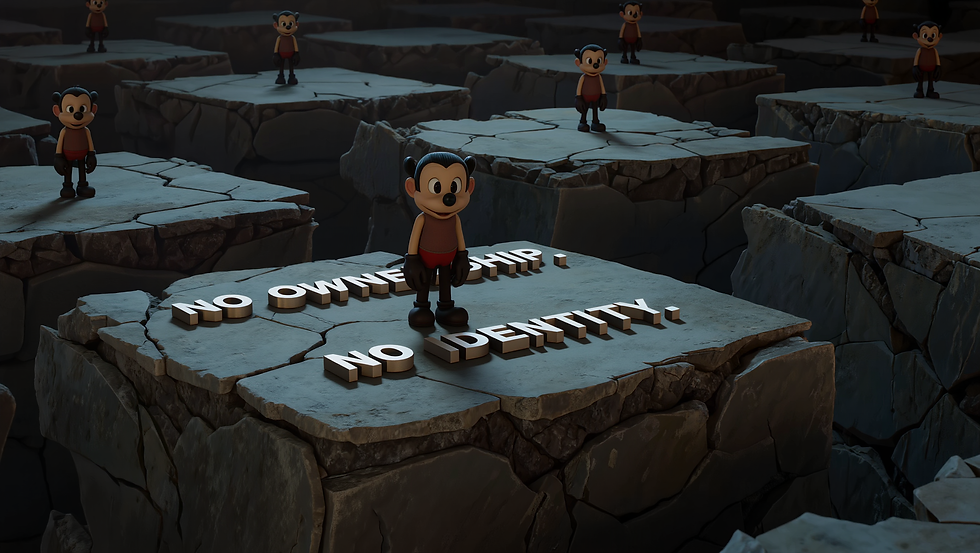
A generic character has no ownership. Any other channel can use something that looks and feels like it. There's no IP to protect, no distinctive identity to build a brand around, no character that a child associates exclusively with you. You might grow an audience around your content, but you won't grow one around your character - because the character doesn't really belong to anyone.
Generic characters also hit a ceiling quickly when it comes to merchandise, licensing, and partnerships. Toy companies, book publishers, and brand partners aren't looking for characters that could be anything. They're looking for characters with a specific, ownable identity - characters that children ask for by name. You can't get there with a template.
What Custom Actually Gives You
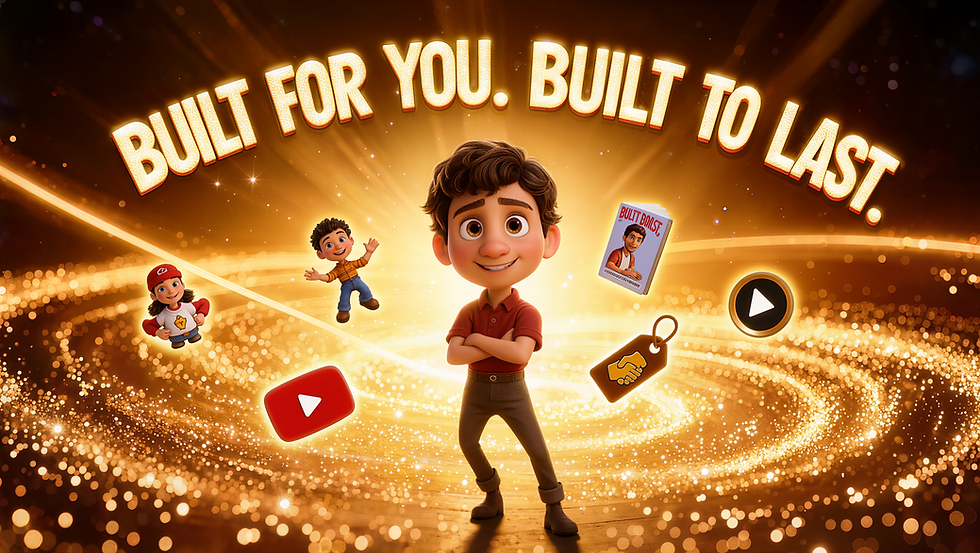
A custom character built from the ground up for your channel is a completely different asset. It's designed around your specific tone, your audience, your values, and the story you want to tell. Every design decision - the shape of the face, the color palette, the way the character moves - is made in service of your brand, not a generic brief that could apply to anyone.
That specificity is exactly what creates connection. When a character has a particular way of tilting their head when they're curious, a signature sound they make when something surprises them, a visual quirk that's instantly recognizable even in a tiny thumbnail - children lock on. They know this character. They feel like they own a piece of them. That feeling is only possible with a custom design, because it only comes from specificity.
A well-built custom character also gives your channel something that no amount of good content can replicate: a reason to come back that exists independent of any single video. Children don't revisit channels. They revisit characters. The custom character you build today is the asset your channel will be built on for years.
The Myth That Custom Is Out of Reach
The biggest reason creators default to generic characters is the assumption that a truly custom, professional character design is beyond their budget or timeline. That was more true a decade ago than it is now. The landscape for kids' character animation has changed significantly, and a studio that specializes in children's content can work with creators at a much wider range of scales than most people expect.
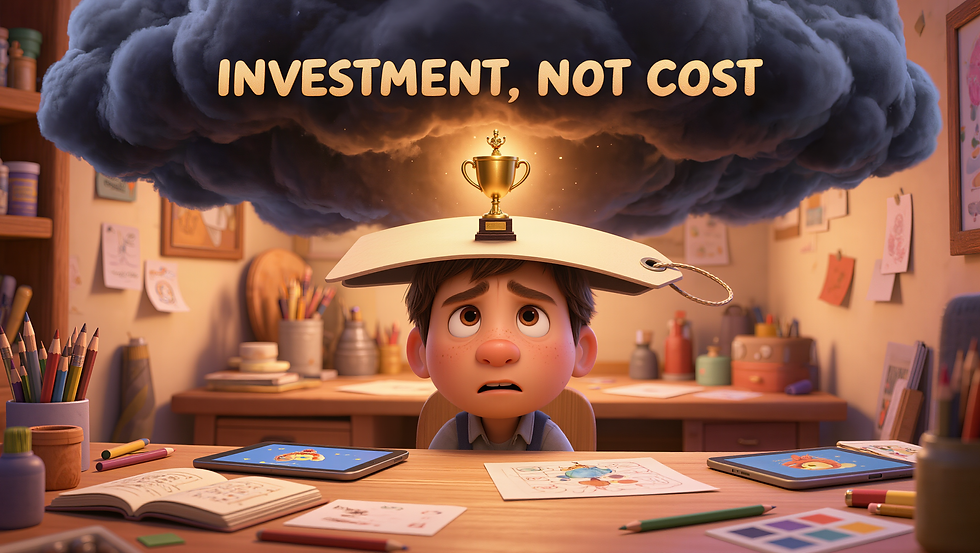
More importantly, the calculation changes when you think about the character as a long-term investment rather than a production cost. A generic character might save you money in month one. A custom character can drive audience loyalty, merchandise revenue, and brand partnerships for years. The math looks very different when you run it over the lifetime of a channel rather than a single launch budget.
The question isn't really whether you can afford a custom character. It's whether you can afford to build something you want to last - on a foundation that belongs to someone else.
What Makes a Custom Character Worth the Investment

Not all custom character work is equal. A character that's technically original but designed without a clear brief, without deep understanding of the target audience, and without the kind of iterative creative process that tests whether children actually connect with it - that character might be unique on paper but generic in impact.
The custom characters that genuinely outperform everything else share a few qualities. They have a personality that exists beyond the visual design - a voice, a way of seeing the world, a set of consistent reactions that make them feel like a real individual. They have a visual identity strong enough to work at every scale, from a full 3D animated episode to a tiny app icon. And they were built by people who understand how children form attachments - and designed every element of the character with that attachment in mind.
The Difference Children Feel

Put a generic character and a well-built custom character in front of a group of children and watch what happens. The generic one gets a polite look. The custom one - the one with a specific personality, a name that sounds like it was chosen for them, a face that feels like it was drawn by someone who knew exactly who this character was - gets something different. Curiosity. Recognition. The beginning of that feeling parents know so well: I think my child loves this character.
That response can't be manufactured with a template. It can't be shortcut with stock assets. It is the direct result of someone sitting down and building a character with genuine intention - asking who this character is, what they want, what makes them laugh, what makes them worth following. That process is what custom character design actually is, at its best.
At Whizzy Studios, it's how we start every project. Not with what the character should look like, but with who they should be. Because a character who is someone specific will always outperform a character who is just something visual. Every time, with every child, on every channel.
Ready to Build Something That's Yours?
If you're running a kids' YouTube channel and you've been making do with a character that doesn't quite feel like it belongs to you - or if you're starting fresh and want to get this right from the beginning - we'd love to talk.
Custom doesn't have to mean complicated. It means intentional. And intentional kids' content with a character that was built for your audience specifically is the most powerful thing you can put in front of children who are looking for something to love.
Tell us about your channel - and let's build a character that's completely, only, yours.


Comments