
3D Animation for Influencers: How Creators Use Characters to Grow Faster


The influencer space has changed — and creators can feel it every single day. The creator economy is no longer just about posting consistently or hopping on trends. Today, influencers are expected to think like media brands. That’s exactly why 3D animation for influencers is becoming one of the smartest ways to grow faster, stay consistent, and build long-term digital assets. More creators are now working with studios like Whizzy Studios to turn ideas into scalable visual content.
QUICK LINKS :
Scroll through Instagram, TikTok, or YouTube Shorts and one thing becomes obvious — content saturation is real. Everyone is talking to the camera. Everyone is explaining. Everyone is reacting. Standing out visually has become harder than ever. This is where animated characters for social media and 3D characters for content creators change the game. Instead of competing with faces, creators compete with visual identity.
This shift toward visual storytelling is now defining influencer growth. Algorithms reward watch time, replays, and loops — which is why short-form animated content, 3D animated reels, and character-driven content strategy are performing so well. A strong character delivers emotion, humor, and clarity faster than most talking-head videos. That’s why 3D animated characters for influencers are becoming a go-to format across niches.
Many creators are also choosing faceless content using 3D animation and virtual characters for personal branding to scale without burnout. Characters allow batching content, repurposing scripts, and staying consistent without daily filming. With professional 3D Animation support, creators can build content libraries instead of chasing daily output.
This is where structured production matters. Influencers are no longer experimenting randomly — they’re investing in 3D Character Design backed by clear Storyboard planning.
Smooth movement and believable expressions come from proper 3D Character Rigging, which turns characters into recognizable digital personalities instead of static visuals.
Some creators mix formats using 2D Animation for speed, while others elevate their brand through cinematic visuals like 3D Animation Music Video styles or branded explainers. Product-based influencers even use 3D Product Design to visually showcase tools, courses, or digital products in a more engaging way.
Entertainment and kids-focused creators are going even further by building recurring characters similar to a 3D Cartoon Series or long-term formats inspired by Children’s TV Series and Kids TV Shows. These characters aren’t just content — they become brand assets.
The biggest shift? Ownership. With digital mascots for influencers, creators aren’t renting attention anymore — they’re building IP. This opens doors to monetizing 3D animated content, long-term brand deals, and scalable collaborations. Many influencers now prefer to Hire Dedicated Artist teams instead of relying on short-term freelancers.
As influencer marketing matures, professional 3D animation for influencers is no longer experimental — it’s strategic. And for creators ready to build something bigger than themselves, animated characters aren’t replacing authenticity — they’re amplifying it.
Why Influencers Are Shifting Toward 3D Animation
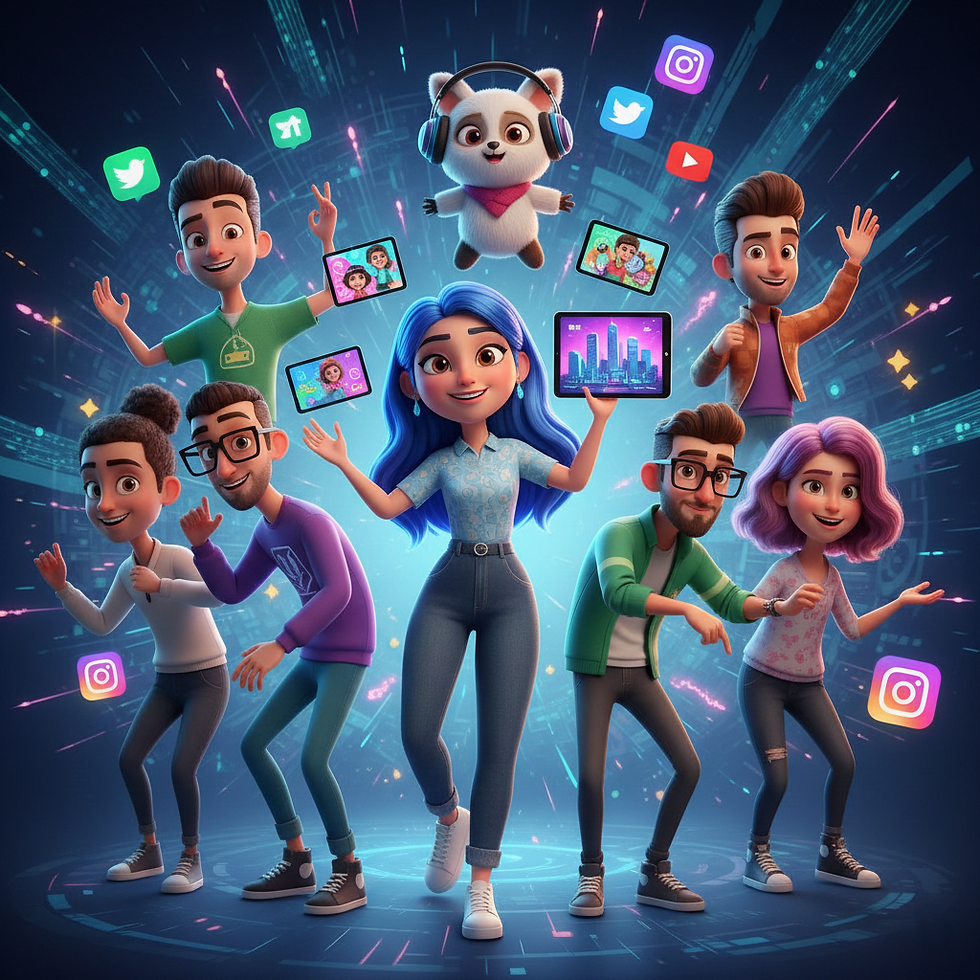
If you’re an influencer right now, you’ve probably felt it already — content fatigue is real. Posts that used to perform well suddenly struggle to reach the same audience. Organic reach feels unpredictable. And creating fresh, engaging content every single day starts to feel exhausting. This is one of the biggest reasons why 3D animation for influencers is gaining serious traction.
Audiences have seen it all — daily vlogs, talking-head videos, aesthetic reels, lifestyle shots. Over time, these formats lose impact. That’s where animated characters for social media and 3D characters for content creators come in. They instantly reset attention. When viewers see something visually different, they stop scrolling. And stopping the scroll is half the growth battle already won.
Algorithms have also changed the rules. Today, platforms reward retention-driven visuals — content that gets watched longer, replayed, and shared. This is why short-form animated content, 3D animated reels, and character-driven content strategy consistently outperform many traditional formats. A well-animated character can express emotion, timing, and storytelling in seconds, which directly boosts watch time. That’s why 3D animated characters for influencers are becoming algorithm-friendly assets.
Face-only or lifestyle content also comes with limitations. Creators can’t always film, travel, dress up, or stay “camera-ready.” Over time, this leads to burnout. With faceless content using 3D animation and virtual characters for personal branding, influencers gain flexibility. Content can be created without filming, edited faster, and reused across platforms. With professional 3D Animation support, creators move from daily effort to planned execution.
Scalability is another big reason for the shift. Influencers want repeatable content formats that don’t depend on mood, energy, or environment. Using 3D animation for creators, a single character can power dozens of videos. With proper 3D Character Design and structured Storyboard planning, creators can batch content weeks in advance instead of scrambling daily.
Behind every smooth animated character is solid production. Clean motion, believable expressions, and personality come from professional 3D Character Rigging. This is what transforms a character from a visual gimmick into a recognizable digital mascot for influencers. Many creators mix formats using 2D Animation for speed or add depth with cinematic styles like 3D Animation Music Video aesthetics.
Privacy and creative control also play a huge role. Not every influencer wants their face tied to every piece of content forever. With 3D influencer characters, creators stay in control of their brand identity. Characters don’t age, get tired, or lose consistency. This opens doors to IP ownership for influencers, scalable content creation, and long-term brand value. Many creators now prefer to Hire Dedicated Artist teams instead of constantly outsourcing one-off edits.
Some creators even expand beyond short-form content. A successful character can evolve into a 3D Cartoon Series, educational formats inspired by Children’s TV Series, or entertainment-driven Kids TV Shows for niche audiences. Others use 3D Product Design to visually promote tools, courses, or digital products in a more engaging way.
This shift isn’t about replacing authenticity — it’s about protecting it. Professional 3D animation for influencers allows creators to stay consistent, creative, and visible without burning out. That’s why more influencers are turning to studios like Whizzy Studios to build animation-driven content systems instead of chasing trends.
How 3D Characters Help Influencers Grow Faster

One thing is clear in today’s creator space — growth isn’t about posting more, it’s about holding attention longer. That’s where 3D animation for influencers delivers a real advantage. When creators switch from face-only videos to 3D animated characters for influencers, they often see higher watch time almost immediately. Why? Because movement, expressions, and visual storytelling keep viewers watching instead of scrolling away. Platforms reward this behavior, making animated characters for social media a powerful retention tool.
Consistent characters also create instant recognition. When audiences see the same 3D influencer characters repeatedly, brand recall becomes automatic. Over time, the character becomes the brand. This is why digital mascots for influencers and virtual characters for personal branding outperform random visual styles. With professional 3D Character Design and clean 3D Character Rigging, characters feel familiar, trustworthy, and memorable — exactly what influencers need for long-term growth.
Another big growth unlock is speed. Filming content daily is draining. Lighting, outfits, energy levels — everything becomes a bottleneck. With 3D animation for creators, influencers can batch content efficiently. Using structured Storyboard planning and reliable 3D Animation workflows, creators can plan weeks of content in advance. This makes short-form animated content easier to produce and far more consistent.
Performance across platforms improves too. A single animated script can become 3D animation for Instagram Reels, 3D animation for YouTube Shorts, and 3D animation for TikTok creators without reshooting anything. That’s the power of character-based content for influencers — one asset, multiple platforms. Many creators even mix formats using 2D Animation for faster turnarounds while keeping premium videos in 3D for brand authority.
Repurposing is another massive advantage. With faceless content using 3D animation, creators can update voiceovers, tweak captions, or localize videos for different audiences without recreating visuals. Some influencers even repurpose the same characters into promotional explainers, ads, or branded visuals using 3D Product Design or cinematic formats like 3D Animation Music Video styles.
Over time, this leads to something bigger than just views — ownership. Characters become reusable IPs. Influencers using character-driven content strategy aren’t just posting content; they’re building assets that can evolve into a 3D Cartoon Series, educational formats inspired by Children’s TV Series, or entertainment-focused Kids TV Shows. This opens doors to monetizing 3D animated content, long-term brand deals, and scalable growth.
To support this scale, many creators now prefer to Hire Dedicated Artist teams instead of relying on one-off edits. Working with studios like Whizzy Studios allows influencers to focus on ideas and storytelling while production stays consistent behind the scenes.
In simple terms, professional 3D animation for influencers turns content into a system. Higher retention, stronger branding, faster production, and effortless repurposing — all working together to help creators grow faster without burning out.
Types of Influencers Using 3D Animated Characters

What’s interesting about 3D animation for influencers is that it’s not limited to one niche anymore. Creators across very different categories are using 3D animated characters for influencers to grow faster, simplify content creation, and build stronger personal brands. Let’s break down who’s using this approach — and why it works so well for them.
Educational and explainer-based creators were among the first to adopt 3D characters for content creators. Explaining ideas visually is simply more effective than talking endlessly on camera. With animated characters for social media, complex topics become easier to understand and more fun to watch. Many educators rely on professional 3D Animation combined with structured Storyboard planning to turn lessons into engaging, repeatable short-form animated content. This approach improves retention and keeps viewers coming back.
Finance, business, and niche knowledge influencers are another fast-growing group using 3D animation for creators. These creators often deal with data-heavy or abstract topics that don’t translate well to face-only videos. Using virtual characters for personal branding and digital mascots for influencers, they simplify serious concepts without losing credibility.
Many also leverage 3D Character Design and 3D Character Rigging to create polished characters that feel professional, consistent, and trustworthy — ideal for long-term authority building.
Fitness, wellness, and motivation creators use 3D influencer characters differently. Instead of replacing real people, characters enhance storytelling. Animated avatars demonstrate movements, visualize progress, or deliver motivational messages without filming daily workouts. With faceless content using 3D animation, creators avoid burnout while maintaining consistency. Many blend styles by mixing 2D Animation for quick tips and 3D animated reels for premium content that boosts brand value.
Kids, family, and storytelling channels are where 3D animated characters for influencers truly shine. Young audiences connect emotionally with characters, not creators. This makes character-driven content strategy essential. Influencers in this space often build recurring characters that grow into full formats like 3D Cartoon Series, educational shows inspired by Children’s TV Series, or entertainment-led Kids TV Shows. These creators aren’t just growing channels — they’re building long-term IPs and scalable brands.
Tech, gaming, and digital-first influencers also rely heavily on animated characters for social media. Explaining software, apps, tools, or digital concepts becomes far more engaging when visuals do the talking. Many creators in this space use 3D animation for Instagram Reels, 3D animation for YouTube Shorts, and 3D animation for TikTok creators to maintain cross-platform consistency. Some even use 3D Product Design to visually showcase tools, features, or digital products in a way that feels modern and intuitive.
Across all these niches, one pattern stays consistent: creators want ownership, scalability, and creative freedom. That’s why many influencers choose to Hire Dedicated Artist teams instead of relying on short-term edits. Working with studios like Whizzy Studios allows them to build professional 3D animation for influencers that supports growth today and monetization tomorrow.
No matter the niche, 3D animation for influencers is no longer experimental. It’s a proven way to grow faster, reduce effort, and turn content into a long-term asset — not just a post.
Popular Content Formats Built Around 3D Characters

Once influencers start using 3D animation for influencers, the biggest shift happens in how content is created. Instead of chasing random trends, creators build repeatable formats that audiences recognize instantly. This is where 3D animated characters for influencers truly shine — they’re flexible, scalable, and perfect for multiple content styles.
Short-form videos and looping reels are the most popular entry point. Platforms love quick, visually engaging clips that loop naturally. With short-form animated content, creators can design moments that restart seamlessly, boosting watch time without forcing it. This is why 3D animation for Instagram Reels, 3D animation for YouTube Shorts, and 3D animation for TikTok creators perform so well. Using professional 3D Animation and expressive 3D Character Design, influencers turn simple ideas into scroll-stopping visuals.
Story-based skits and recurring character series are where growth compounds. When audiences see the same 3D influencer characters repeatedly, they start following the character, not just the account. This is classic character-driven content strategy. Over time, short skits evolve into episodic formats, sometimes even expanding into a full 3D Cartoon Series or narrative concepts inspired by Children’s TV Series and Kids TV Shows. These formats build loyalty instead of one-time views.
Voice-over driven explainers are a favorite among educational, finance, and niche knowledge creators. With 3D characters for content creators, influencers can explain complex ideas without appearing on camera. This makes faceless content using 3D animation both practical and powerful. Clear Storyboard planning combined with smooth 3D Character Rigging ensures characters feel natural, expressive, and easy to follow. Some creators even mix styles using 2D Animation for faster output while keeping premium explainers in 3D.
Reaction-style and commentary formats are another fast-growing use case. Instead of filming reactions, influencers use animated characters for social media to respond to trends, news, or audience comments. This keeps content timely without constant filming. With virtual characters for personal branding and digital mascots for influencers, creators maintain consistency even when content volume increases. One animated setup can support daily reactions across platforms with minimal effort.
Branded collaborations and sponsored storytelling are where monetization becomes smoother. Brands love consistency, and professional 3D animation for influencers delivers that. Instead of awkward product placements, creators integrate brands directly into animated narratives. Influencers often use 3D Product Design to showcase products naturally or elevate campaigns with cinematic styles like 3D Animation Music Video formats. This makes monetizing 3D animated content feel organic rather than forced.
Across all these formats, one thing stays constant: efficiency. With 3D animation for creators, one character powers multiple content styles, platforms, and campaigns. That’s why many influencers choose to Hire Dedicated Artist teams instead of relying on ad-hoc edits. Partnering with studios like Whizzy Studios allows creators to focus on ideas while production stays consistent.
In short, animated characters for social media aren’t limiting creativity — they multiply it. From looping reels to sponsored storytelling, these formats help influencers grow faster, stay consistent, and turn content into long-term assets.
Branding, Monetization & Long-Term Advantages

For most creators, real growth isn’t just about views — it’s about building something that lasts. This is where 3D animation for influencers moves from being a content tactic to a brand strategy. When influencers use 3D animated characters for influencers, they’re not just creating posts; they’re building recognizable digital identities that audiences remember and trust.
A strong digital persona is one of the biggest advantages of using 3D characters for content creators. When the same character appears across reels, shorts, and videos, followers instantly know who the content is from — even before seeing the username. This is why animated characters for social media, digital mascots for influencers, and virtual characters for personal branding dramatically improve brand recall. With professional 3D Character Design and expressive 3D Character Rigging, characters feel consistent, polished, and brand-owned.
One of the most overlooked benefits is ownership. Unlike trend-based content, 3D influencer characters can become full-fledged intellectual property. Creators using character-driven content strategy aren’t dependent on algorithms or personal availability — they own their character outright. With support from structured 3D Animation workflows and proper Storyboard planning, a character can evolve into a long-term asset rather than a short-term format.
Brands notice this consistency. Influencers offering professional 3D animation for influencers are often seen as more reliable partners because their content style doesn’t fluctuate. Animated storytelling allows creators to integrate products naturally, which increases trust and performance. This is why brand deals with animated characters are becoming more common. Many creators even use 3D Product Design to showcase products inside animated worlds or elevate campaigns through cinematic formats like 3D Animation Music Video visuals.
Burnout is another major issue this approach solves. Daily filming, constant editing, and always being “on” takes a toll. With faceless content using 3D animation, creators reduce filming dependency while maintaining consistency. Using 3D animation for creators, content can be batched, scheduled, and reused across platforms like 3D animation for Instagram Reels, 3D animation for YouTube Shorts, and 3D animation for TikTok creators — all without reshooting anything.
Over time, these characters unlock opportunities beyond social platforms. Many influencers expand successful characters into a 3D Cartoon Series, educational formats inspired by Children’s TV Series, or entertainment-focused Kids TV Shows. Others explore merchandise, licensing, and media brand extensions — all powered by the same animated IP.
To manage this growth, creators often choose to Hire Dedicated Artist teams instead of relying on inconsistent freelancers. Partnering with studios like Whizzy Studios allows influencers to focus on ideas, storytelling, and audience connection while production stays consistent behind the scenes.
In the long run, monetizing 3D animated content isn’t just about ads or sponsorships — it’s about building a scalable brand that doesn’t rely on constant filming or personal presence. That’s why 3D animation for influencers is quickly becoming the foundation for creators who want longevity, ownership, and creative freedom.
Challenges, Best Practices & Final Takeaway
As powerful as 3D animation for influencers is, it’s important to approach it the right way. Like any strong growth tool, it comes with challenges — but when handled properly, 3D animated characters for influencers can outperform traditional content formats without burning creators out.
One of the first challenges is initial character design and setup. A character isn’t just a visual — it’s a personality. Rushing this step often leads to characters that look generic or disconnected from the creator’s brand. This is why professional 3D Character Design matters so much. When paired with proper 3D Character Rigging, characters move naturally, express emotion, and feel alive — which directly impacts watch time and trust.
Another common mistake is choosing the wrong animation style. Not every audience needs ultra-realistic visuals. Some niches respond better to stylized or playful looks, while others prefer clean, minimal designs. Understanding 2D vs 3D animation for creators is key here. Some influencers mix fast 2D Animation content with premium 3D Animation for flagship posts. The goal isn’t visual complexity — it’s clarity and consistency.
Quality control is another big concern. Many creators assume more effects equal better performance, but over-producing often hurts engagement. Audiences connect with stories, not just visuals. This is where storytelling over visuals becomes critical. Clear scripting and smart Storyboard planning ensure that animated characters for social media stay focused on message, timing, and emotional beats — not unnecessary visual noise.
Creators also worry about maintaining output without sacrificing quality. This is where 3D animation for creators truly shines. With faceless content using 3D animation, influencers can batch content, schedule weeks ahead, and repurpose assets easily. One character can support short-form animated content, 3D animation for Instagram Reels, 3D animation for YouTube Shorts, and 3D animation for TikTok creators — all without re-shooting or re-filming.
A major best practice is thinking long-term. Influencers who treat characters as disposable formats often miss the bigger opportunity. With a strong character-driven content strategy, 3D influencer characters evolve into brand assets. Some grow into a 3D Cartoon Series, others into educational formats inspired by Children’s TV Series or entertainment-led Kids TV Shows. Many creators also use 3D Product Design to expand into product launches, merch visuals, or branded explainers.
Burnout reduction is another underrated advantage. Daily filming isn’t sustainable for most creators. With virtual characters for personal branding and digital mascots for influencers, creators stay visible without being constantly on camera. This opens the door to scalable content creation, better work-life balance, and stronger creative focus.
For creators who want consistency and speed, choosing to Hire Dedicated Artist teams is often more effective than handling everything solo. Working with experienced studios like Whizzy Studios ensures professional 3D animation for influencers that aligns with growth goals instead of just looking good.
Final Takeaway
Here’s the key thing to remember: 3D characters are a growth tool, not a trend. They don’t replace creativity — they multiply it. When used strategically, 3D animation for influencers improves retention, strengthens branding, reduces burnout, and turns content into long-term assets.
Creators who focus on storytelling, consistency, and ownership will always outperform those chasing visuals alone. And in that sense, monetizing 3D animated content, building IP, and scaling across platforms becomes a natural outcome — not a gamble.


Comments